1000x Faster Auth: How ODAC.JS Re-engineered Session Security
Authentication is the silent performance killer of the modern Node.js stack. Every single request that hits your server triggers a session validation check, often involving expensive cryptographic hashing or multiple database round-trips. While security is paramount, the "standard" way of handling sessions has become a bottleneck for high-traffic applications.
With the latest update to the ODAC.JS core, we decided to rewrite the rules of session management. We didn't just patch the existing system; we re-engineered the ODAC.AUTH engine from the ground up to deliver a 1000x performance boost while significantly hardening your application against session hijacking and race conditions.
The Performance Trap: Beyond scrypt
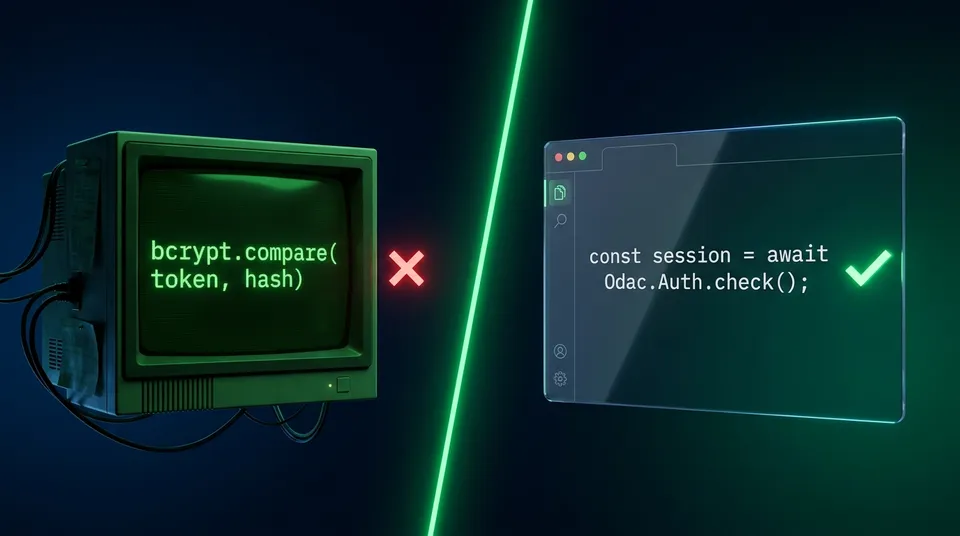
For years, developers have used slow hashing algorithms like scrypt or bcrypt for session tokens. While these are essential for password storage, using them on the "hot path" of every single request is an architectural mistake. It consumes valuable CPU cycles and increases latency for every user.
ODAC.JS now utilizes high-entropy SHA-256 secrets for session tokens. By moving away from expensive scrypt hashing for active sessions, we've reduced validation overhead from milliseconds to microseconds. This transition is handled transparently with in-place upgrades for all legacy sessions, ensuring that your users stay logged in while your server's CPU usage plummets.
Seamless Token Rotation with a Grace Period
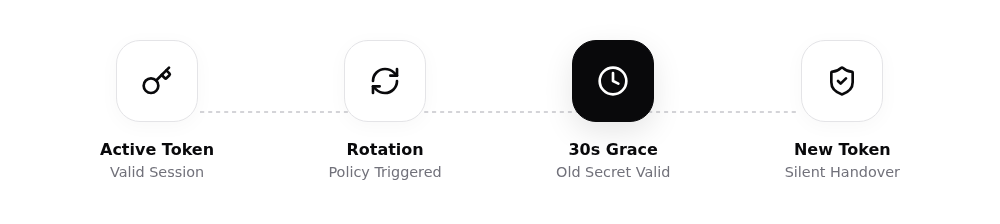
Token rotation is a non-negotiable requirement for enterprise security, but it often creates a nightmare for users on flaky mobile connections. If a client sends a request just as a token is rotating, a lost response can result in the user being abruptly logged out.
ODAC.JS solves this with a sophisticated 30-second grace period. When a token rotates, the old secret remains valid for half a minute. This allows concurrent requests to finish and provides a safety net for unstable networks. It is the kind of "invisible" DX that makes ODAC.JS feel premium.
Quick Start: Configure Your Security Policy
You can fine-tune these behaviors directly in your odac.json configuration file. ODAC.JS provides sensible defaults, but gives you full control over the session lifecycle.
{
  "auth": {
    "table": "users",
    "token": "user_tokens",
    "maxAge": 2592000000,
    "rotationAge": 900000,
    "rotation": true
  }
}
Built-in Anomaly Detection: The Invisible Bouncer
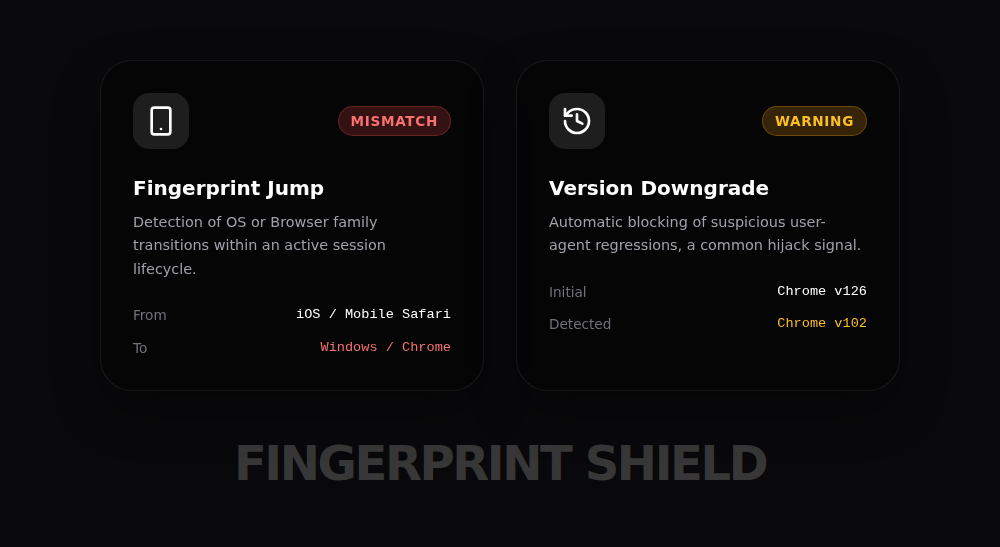
Security should not come at the cost of developer complexity. The new ODAC.JS auth engine features built-in anomaly detection that fingerprints every session based on the OS, browser family, and version.
The system automatically monitors for suspicious behavior without requiring a single line of custom code from you. If a session suddenly jumps from a mobile Safari instance on iOS to an older version of Chrome on Windows, ODAC.JS notices. By detecting browser version downgrades or language mismatches paired with IP changes, the framework can block session hijacking attempts before they cause damage.
// Controller login flow
module.exports = async function (Odac) {
    const { email, password } = Odac.Request.post;

    // ODAC.JS handles fingerprinting and SHA-256 token generation automatically
    const loginSuccess = await Odac.Auth.login({ email, password });

    if (loginSuccess) {
        return Odac.direct('/dashboard');
    }

    return Odac.direct('/login?error=invalid_credentials');
}
Scalability by Design: Traffic-Driven Cleanup
A common pitfall in session management is the "zombie token" problem, where expired sessions clutter the database and degrade performance over time. Most frameworks require you to set up separate cron jobs or manual workers to prune these records.
ODAC.JS takes a more intelligent approach. We've implemented a periodic, traffic-driven sweep that purges expired tokens and rotation leftovers. This cleanup logic is interleaved with standard auth operations, ensuring that your session table remains lean and performant even at massive scale, with zero maintenance required.
By focusing on the intersection of extreme performance and proactive security, ODAC.JS continues to provide the most robust foundation for Node.js developers who refuse to compromise.