Redundancy by Design: Multi-Record DNS Support
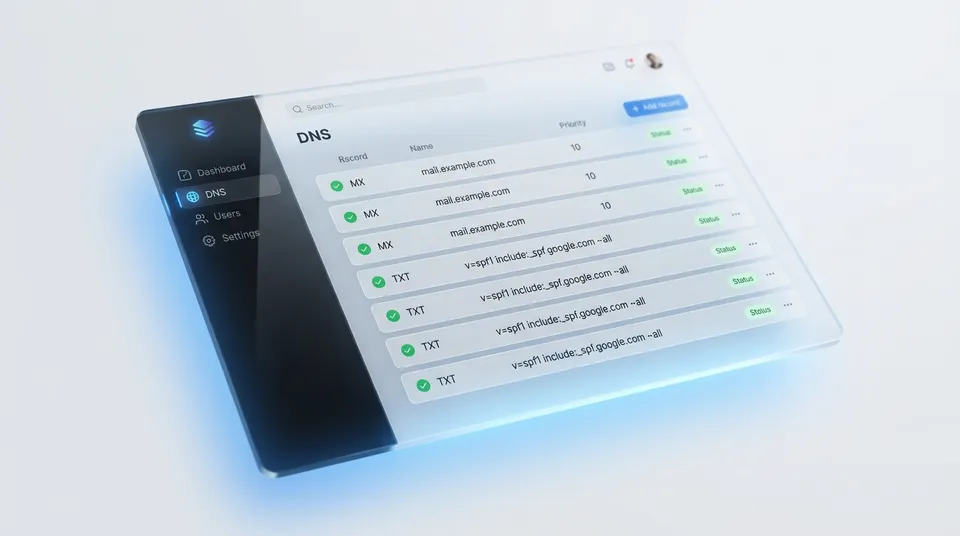
Infrastructure is only as strong as its weakest link, and for most, that link is DNS.
In the old world of brittle configurations, adding a second mail server or a new site verification tag often meant accidentally overwriting the first. We decided that "good enough" wasn't enough for the engineers building the next generation of resilient services on ODAC.
Today, we are thrilled to announce that the ODAC authoritative DNS engine now natively supports multiple records for the same hostname across all key multi-value types, including MX, TXT, CAA, and NS.
Why Multi-Record Support Matters
Redundancy isn't a luxury; it is a requirement. Whether you are load-balancing mail traffic across multiple providers or verifying your domain with three different security services simultaneously, your DNS engine needs to handle the complexity without blinking.
The previous "replace-on-conflict" logic was a safety rail that we have now evolved into a high-performance engine capable of maintaining RFC-compliant uniqueness for single-value types like A and CNAME, while allowing unlimited entries for everything else.
Seamless Management from the Dashboard
Managing your DNS zones should feel like playing with blocks, not diffusing a bomb. We have updated the Dashboard to make multi-record management a frictionless, "one-click" experience.
Start by navigating to the DNS section from your sidebar at app.odac.run.

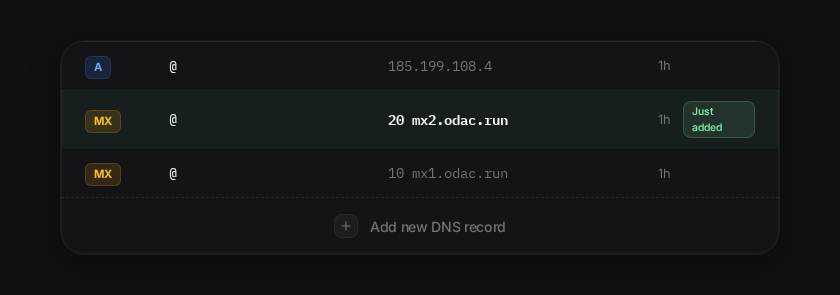
Once you have selected your domain from the zone picker, you will see your current record set. To add a new redundant record, simply click the Add new DNS record placeholder at the bottom of the table.
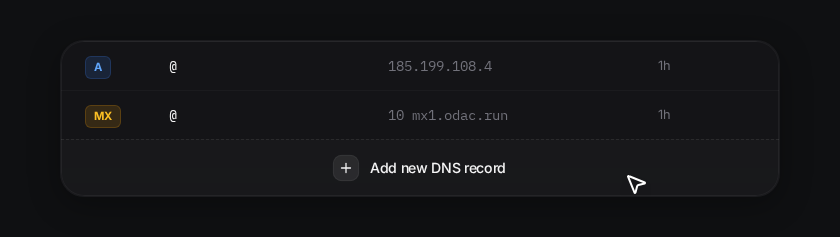
The table morphs instantly into an inline draft row. Enter your details: perhaps a secondary MX record with a lower priority, or an additional TXT tag for a new security scan service.
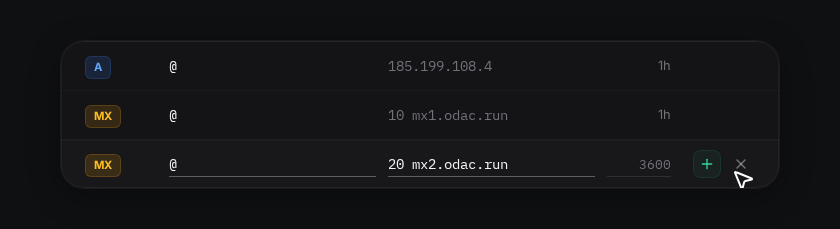
Hit the confirm button, and your new record is live. No page refreshes, no "pending" states, just instant, authoritative propagation.
Power Users: The CLI Way
For those who live in the terminal, the odac CLI has been updated to support these multi-record patterns natively. You can now chain commands to build complex configurations in seconds.
# Adding redundant mail servers for high availability
odac dns record cloudmesh.io MX "10 mx1.odac.run"
odac dns record cloudmesh.io MX "20 mx2.odac.run"

# Adding multiple TXT records for verification
odac dns record cloudmesh.io TXT "v=spf1 include:_spf.google.com ~all"
odac dns record cloudmesh.io TXT "site-verification=abc123xyz"
The CNAME Exception
While we have unlocked the power of multi-value records, we remain committed to strict RFC compliance to keep your infrastructure healthy. CNAME records still follow the exclusivity rule: if a hostname is an alias (CNAME), it cannot coexist with any other record types. Our validation engine handles this for you, preventing configuration errors before they reach the wire.
Engineering for Resilience
This update is part of our broader mission to make ODAC the most reliable, zero-config platform for your mission-critical infrastructure. By removing the friction of manual DNS shuffling, we are giving you back the most valuable resource you have: time to build.
Experience the new DNS engine today at app.odac.run.