Zero-Config Authentication in ODAC.JS
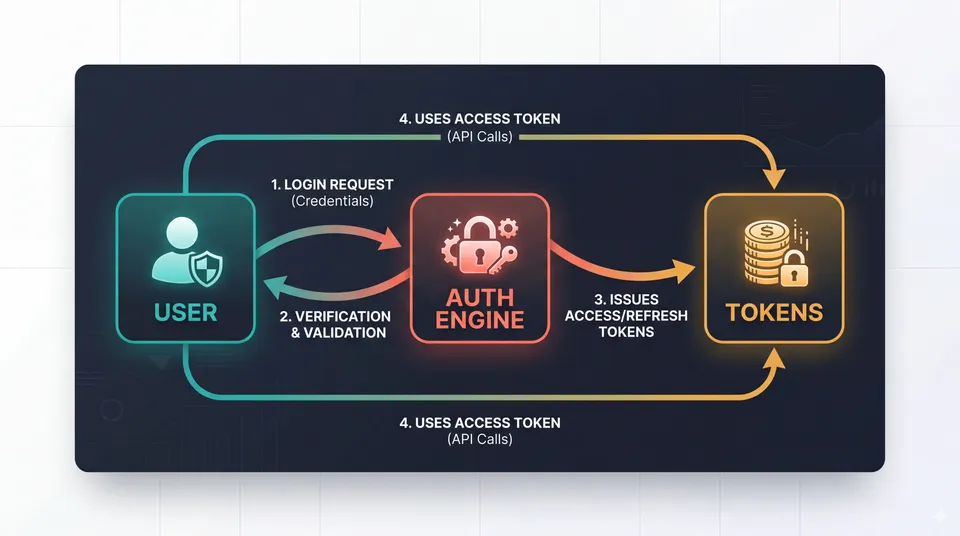
Building secure authentication in Node.js usually means gluing together half a dozen fragmented libraries. You need a password hasher, a session store, token rotation logic, and CSRF protection. This boilerplate is fragile and introduces severe technical debt.
In ODAC.JS, we engineered authentication directly into the core framework. We refused to compromise on security or developer experience. Sessions should never be an afterthought.
Our goal was simple. We wanted to provide an enterprise-grade security baseline with absolutely zero configuration. By prioritizing native Node.js capabilities and avoiding external dependencies, we deliver a highly secure authentication pipeline. It includes ready-to-use session management, secure password hashing, and authentication helpers right out of the box.
Secure Session Management
In-memory sessions are notorious for leaking memory and failing entirely in multi-process clusters. Most frameworks force you to immediately adopt an external dependency to solve this. ODAC.JS takes a fundamentally different approach with built-in persistent session management.
The framework manages a secure cookie-based session system with automatic expiration and cleanup. It uses a sliding window approach. Active users stay logged in indefinitely, while inactive sessions are automatically cleaned up during each login. Your database stays clean and performant without any manual intervention.
Show Me The Code: The Login Flow
Handling a standard login requires just a few lines of code. The Odac.Auth service is your bouncer. It manages who gets in and who stays out.
// Controller for your login form
module.exports = async function (Odac) {
    const { username, password } = Odac.Request.post;

    // Fetch the user from your database
    const user = await yourDatabase.findUser(username, password);

    if (user) {
        // Create a secure session
        await Odac.Auth.login({ email: username, password });
        return Odac.Response.json({ message: 'Login successful' });
    } else {
        return Odac.Response.json({ error: 'Invalid credentials' }, 401);
    }
}
Refresh Token Rotation
Security is an active process. Static tokens are a massive vulnerability. ODAC.JS features built-in Refresh Token Rotation to continuously issue new tokens while invalidating old ones. This is configured natively in odac.json without writing a single line of rotation logic.
Rotating tokens usually breaks long-lived connections or concurrent requests in Single Page Applications. We solved this at the framework level.
When a token is rotated, the old token remains valid for a 60-second grace period. Subsequent concurrent requests using the old token still pass within those 60 seconds. After 60 seconds, the old token is naturally expired.
Show Me The Code: Authentication Helpers
Once a user is logged in, you need a fast and secure way to verify their status across your application. ODAC.JS provides powerful authentication helpers to check the guest list:
- Check Status:
Odac.Auth.check()verifies if the active session is valid. - Get Full User:
Odac.Auth.user(null)retrieves the entire user object securely. - Get Specific Field:
Odac.Auth.user('email')pulls a single attribute without overhead.
// A protected dashboard route
module.exports = async function (Odac) {
    // Check if the current user is logged in
    const isLoggedIn = await Odac.Auth.check();

    if (!isLoggedIn) {
        return Odac.Response.json({ error: 'Unauthorized' }, 401);
    }

    // Retrieve the full user object securely from the session
    const user = Odac.Auth.user(null);

    // Retrieve a specific field
    const email = Odac.Auth.user('email');

    return Odac.Response.json({
        message: 'Welcome back',
        email: email
    });
}
Zero Dependency, Maximum Power
Authentication should not require a bloated node_modules folder. By relying on native Node.js capabilities, ODAC.JS keeps your deployment lightweight and your attack surface incredibly small. We provide the tools you need to build secure platforms without the operational overhead.