ODAC.JS Intelligent Database Caching
Database latency is the silent killer of Node.js performance. Even with the most optimized PostgreSQL indexes, every physical disk round-trip adds milliseconds that compound under high concurrency. We built ODAC.JS to be fast, but we realized that for many applications, the fastest database query is the one you never have to make.
Most developers reach for Redis to solve this, but that introduces a new category of pain. You have to handle manual cache-busting, manage serialization, and deal with stale data across joined tables. It is a boilerplate-heavy process that distracts from building features.
Today, we are introducing the ODAC.JS Read-Through Cache. It is a native, zero-config solution that turns complex database queries into O(1) memory lookups while keeping your data perfectly synchronized.
Show Me The Code
The philosophy of ODAC.JS is simplicity. To cache any query, you just append a single method to your existing query builder chain.
// Results are cached for 5 minutes (300 seconds)
const posts = await Odac.DB.posts
  .cache(300)
  .where({ status: 'published' })
  .orderBy('date', 'desc')
  .select();
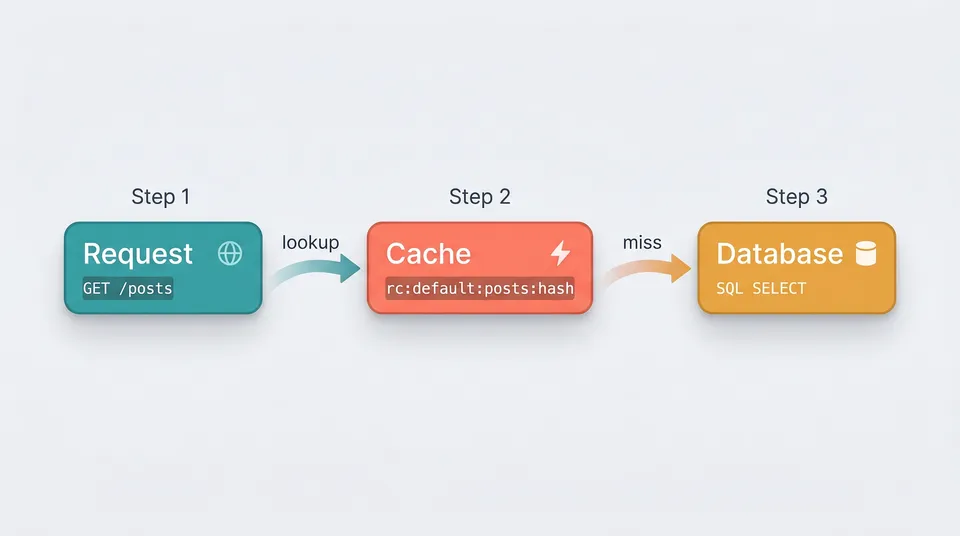
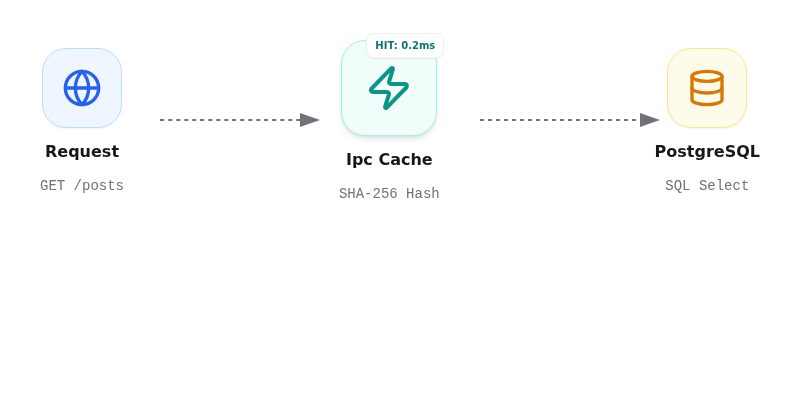
On the first request, ODAC.JS executes the SQL, generates a SHA-256 hash of the query and its bindings, and stores the result in the IPC layer. Subsequent requests for the same query return the data directly from memory in sub-millisecond time.
The Invalidation Breakthrough
The biggest challenge with caching is not storing data, but knowing when to throw it away. Traditional frameworks leave this to the developer. In ODAC.JS, we decided that the framework should be smart enough to handle its own cleanup.
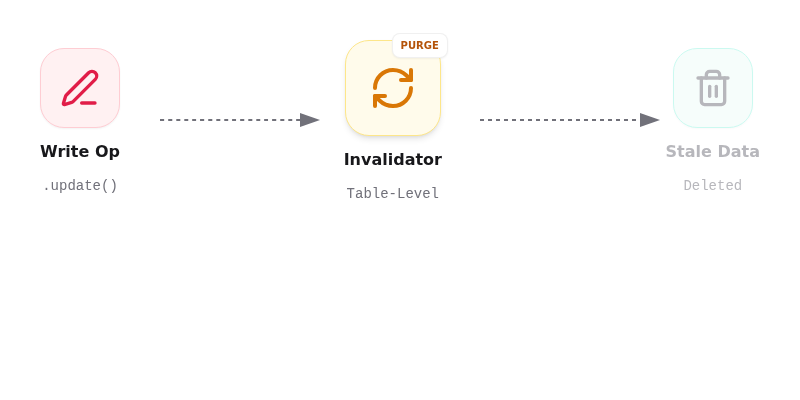
ODAC.JS implements Automatic Table-Level Invalidation. The moment you perform an insert(), update(), or delete() on a table, the framework automatically purges every cached query associated with that table.
// This single update automatically clears the entire cache for the 'posts' table
await Odac.DB.posts
  .where({ id: 42 })
  .update({ title: 'A New World' });
This intelligence extends to complex relationships. If you cache a query with multiple JOIN clauses, ODAC.JS tracks those dependencies. A write to any of the joined tables will trigger a purge of the cached result, ensuring your application never serves stale data to your users.
Enterprise-Grade Scaling
While the default behavior uses an in-memory store in the primary process, ODAC.JS is built for horizontal scaling. By switching your IPC driver to Redis in your configuration, the Read-Through Cache becomes globally shared across your entire server cluster.
Whether you are running on a single VPS or a distributed Kubernetes cluster, the API remains identical. You get the performance of a distributed cache without the architectural overhead.
The Read-Through Cache is now available in the core ODAC.JS package. It is time to stop worrying about database bottlenecks and start focusing on the developer experience.