Scalable Messaging: The New ODAC.JS IPC Engine
Scaling a Node.js application horizontally used to be an exercise in frustration when it came to shared state. You either reached for a heavy external dependency or spent your weekends debugging race conditions in your custom IPC logic.
In ODAC.JS, we believe that inter-process communication should be as invisible as it is reliable. That is why we have completely overhauled the ODAC.IPC module, bringing a hardened Redis driver and a new handle based subscription API to the framework.
The Distributed Headache
When you move from a single process to a cluster of workers, or even multiple servers, the way your application communicates must evolve. Standard event emitters do not cut it anymore.
Previously, developers had to manually track callback references to ensure they could unsubscribe from channels without leaking memory. This boilerplate was a friction point we wanted to eliminate.
The Redis driver also faced challenges with the release of node-redis v5. The shift toward per-channel listeners meant that a global message event was no longer a reliable bridge. We saw this as an opportunity to rebuild for the future.

Show Me The Code
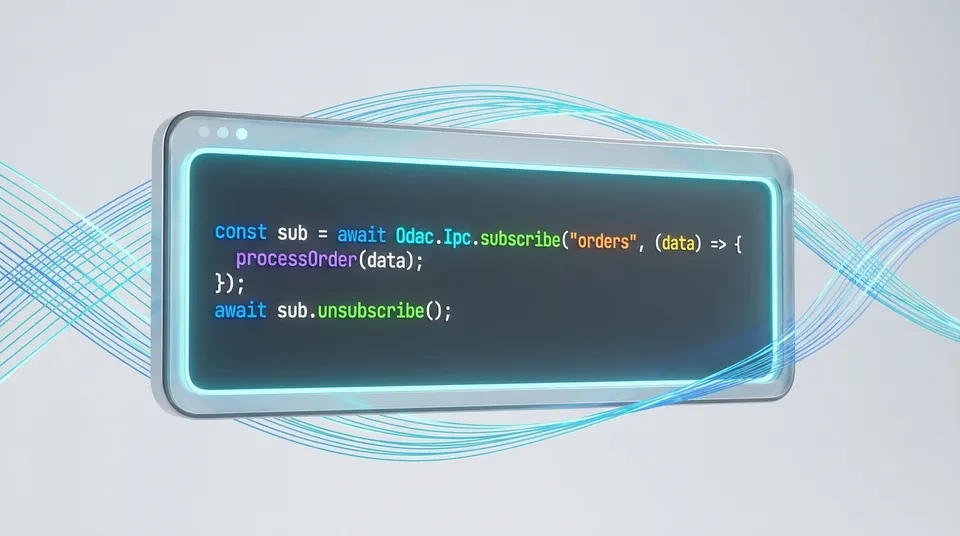
The new API focuses on lifecycle ergonomics. Instead of passing around callbacks to manage your subscriptions, ODAC.IPC.SUBSCRIBE now returns a handle that knows exactly how to tear itself down.
// Subscribe and get a lifecycle handle
const sub = await Odac.Ipc.subscribe('orders:new', (order) => {
  console.log('New order received:', order.id);
});

// Unsubscribe easily using the handle
await sub.unsubscribe();
This pattern ensures that you never accidentally leave a listener hanging. It is particularly powerful when used within Service Providers or short-lived worker tasks.
Hardened Redis Integration
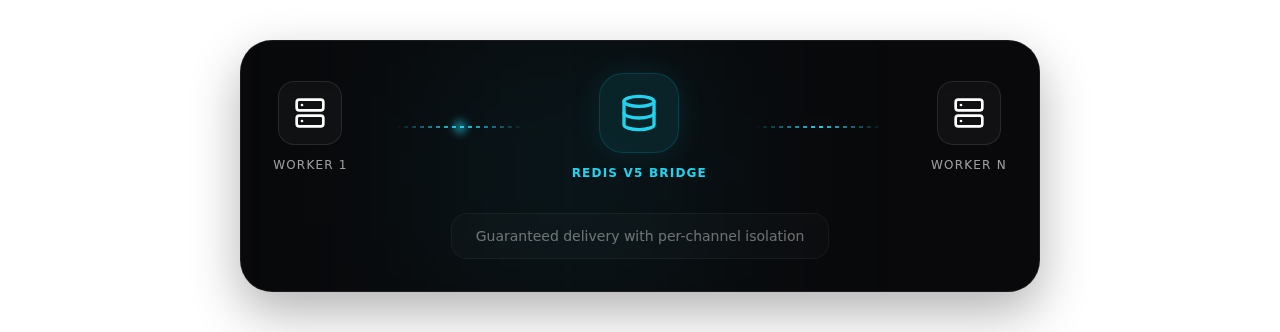
For those scaling across multiple physical servers, the Redis driver is the backbone of the ODAC.JS ecosystem. We have aligned our implementation with the latest standards, ensuring that every channel gets its own dedicated listener.
This architectural shift guarantees message delivery and prevents the "silent failure" scenarios that haunt many distributed systems. We have also unified the behavior between the memory and redis drivers.
Whether you are developing locally with the in-memory cluster driver or deploying to a massive Redis-backed production cluster, the code you write remains identical.
Safety First: Guarded Unsubscriptions
One common pitfall in IPC systems is the accidental removal of all listeners when you only intended to remove one. In the new ODAC.IPC, calling unsubscribe(channel) without a callback will no longer clear the entire channel.
Instead, the framework will log a warning and protect your existing listeners. If you truly need to wipe the slate clean, we have introduced a dedicated method for that purpose.
// Clear every single listener on a specific channel
await Odac.Ipc.unsubscribeAll('chat:notifications');
Zero-Config Reliability
As with everything in ODAC.JS, the IPC module is designed to work with zero configuration. You can switch from local memory to a global Redis cluster by changing a single line in your config.js.
The framework handles the heavy lifting of connection pooling, message serialization, and automatic cleanup of request-scoped subscriptions. This allows you to focus on building features rather than managing infrastructure.
The new ODAC.IPC is not just an update. It is a commitment to providing the most stable and developer-friendly messaging foundation in the Node.js ecosystem.